


If you’re like me, you’re probably a little burnt out by algorithms and digital noise. We live in an age of infinite choice and AI-generated playlists and music, but somehow, it feels somewhat harder to sift through all the noise that’s out there. This is my attempt to fix that. Liner Notes is a new section where I’ll share deeper stories about the albums in my collection. My mission is simple: one record, one story, and one deep-dive at a time.
Since I bought my first record in 1982, I’ve been obsessed with the stories hidden in the grooves. This is a sanctuary for the music nerds, and the audibly curious, dedicated to records and the liner notes that keep them alive. Let’s dig in!
Liner Notes
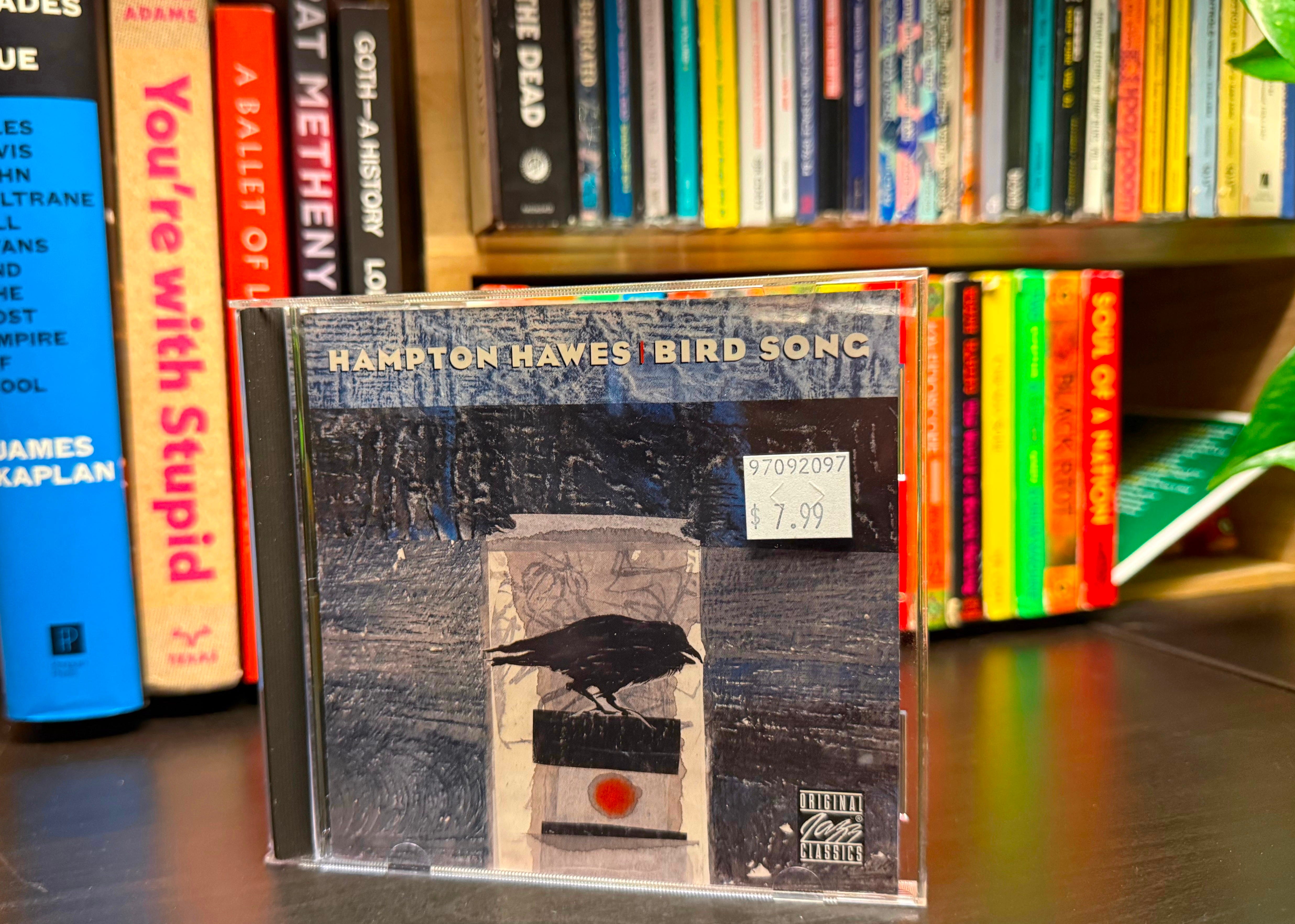
Imagine recording an album in 1956 and not having a single person hear it for over forty years. That’s the mystery of Hampton Hawes’ Bird Song.
Hampton Hawes was considered one of the greats of West Coast blues-driven piano. His influences came from Bud Powell and Charlie Parker, both early inventors of BeBop. Bird Song is a special album because it’s almost like a time capsule release. These trio recordings are from 1956 and 1958, but weren’t released until 1999 by Contemporary Records courtesy of Original Jazz Classics and Fantasy Jazz.
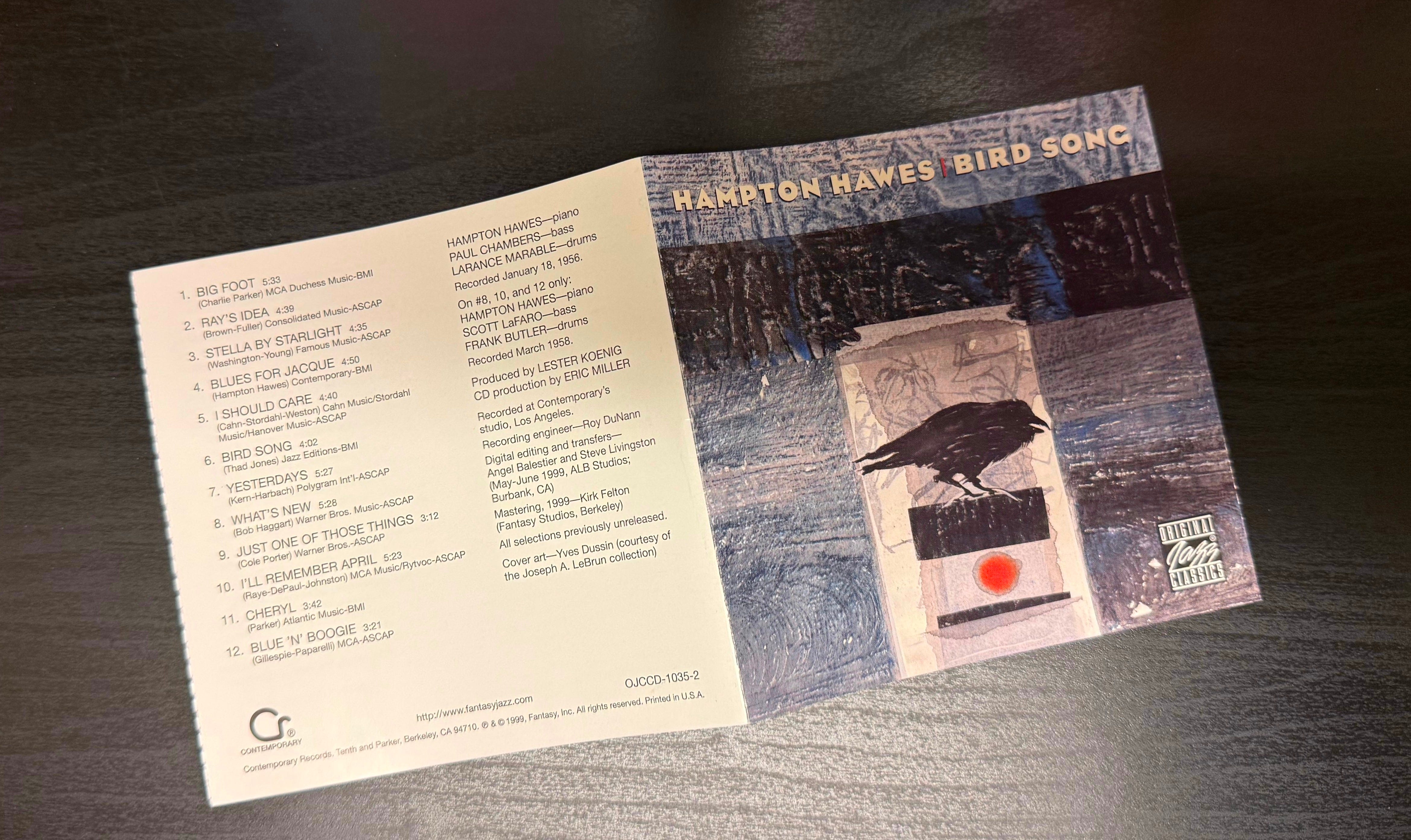
The album features 12 tracks, nine of which were recorded in January of 1956 with Paul Chambers on bass and Larance Marable on drums. The other three pieces of music were recorded in March of 1958 with Scott LaFaro on bass and Frank Butler on drums.
Shortly after these tracks with LaFaro and Butler were laid down, Hawes was arrested and sent to prison for heroin possession, and didn’t return until a 1963 presidential pardon. He’d later write about this journey in his autobiography Raise Up Off Me, but these recordings capture the trio right before the storm: virtuosic, forward-thinking, and tragically unaware of how long it would be before he’d see a piano again.
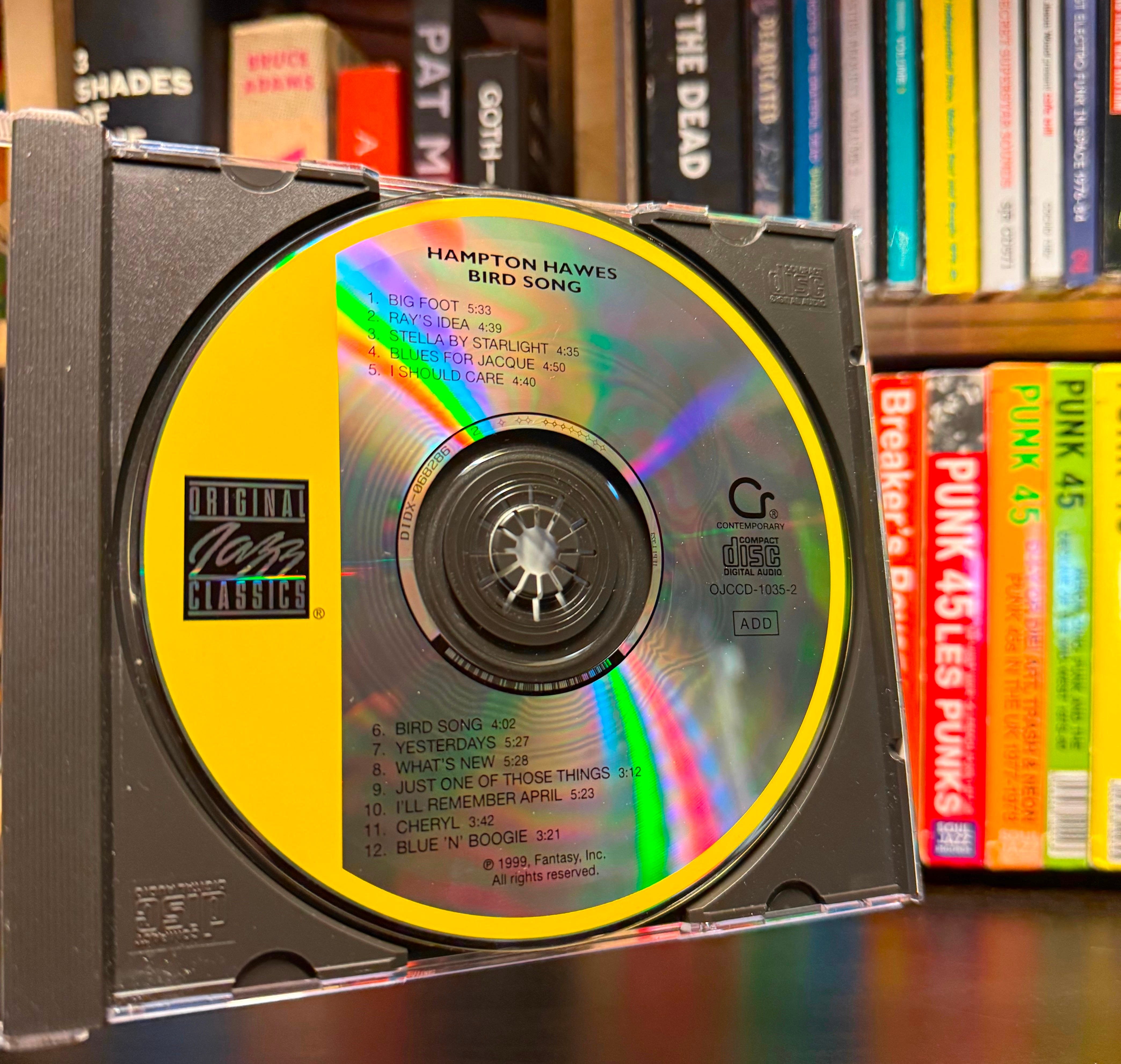
Bird Song was a revelation because it caught Hawes right at his peak, blending his Charlie Parker influence (hence the title) with his signature West Coast swing. This entire album is beautiful, and I love Paul Chambers' bass playing alongside Hawes’ bebop-style piano, covering Charlie Parker, Cole Porter, and Dizzy Gillespie, but my favorite tracks are the 1958 dates with Scott LaFaro on bass.
On What’s New, LaFaro’s incredible bass-playing is on full display with an early solo before Hawes’ piano gently rolls back in, eventually joined by Frank Butler’s crisp snare. It is simply a beautifully recorded piece of music.
Hearing I'll Remember April gives me chills. It starts mid-tempo, and the tightness of the Hawes/LaFaro/Butler trio is almost supernatural. While it was originally performed by Woody Herman, Hawes firmly places his delightful version alongside those recorded by legends like The Bird, Miles Davis, and Chet Baker.
The album closes with Blue ‘N’ Boogie, a three-minute Dizzy Gillespie tune. It’s high-speed bebop where LaFaro keeps rolling, accented by Butler’s perfect timing and the extraordinary piano of Hawes.
Lastly, the 1958 tracks on Bird Song are a taste of what you can also hear on Hawes' album For Real!, which was recorded that same year but not released until 1961 by Contemporary Records, while he was still in prison. Both sessions were recorded during that same magic window with Scott LaFaro before Hawes' hiatus. Sadly, just before the album was released, and while Hawes was still locked up, LaFaro tragically died in a car accident. He was only 25 years old.
Take a listen, let me know if you can hear the shift in energy between the two trios, and tell me your favorite tracks. Aside from the YouTube link above, the album isn’t streaming on any digital platforms I could find, but you can get a copy on Discogs.
Thanks for reading. - JB
Love Hampton but somehow missed this one so I added from You Tube to stream. ‘For Real’ and ‘Four’ and the ‘All Night Long’ volumes are longtime favorites. I just noticed’Mingus 3’ another one I don’t have so have added it also…..
This encapsulates what’s so great about Substack to me. Nowhere else am I as likely to find a deep dive into an underrated jazz pianist like Hampton Hawes.